

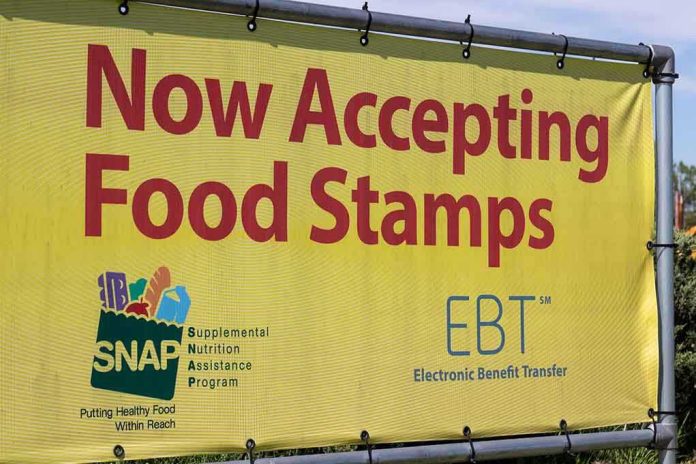
Nancy Mace’s FAIR Act introduces a photo ID requirement on SNAP EBT cards, igniting debate over fraud prevention and access.
Story Highlights
- The FAIR Act mandates photo IDs on SNAP EBT cards to combat fraud.
- Retailers must verify card photos before completing SNAP transactions.
- The bill could save taxpayer money but raise concerns about access.
- Opponents argue it may stigmatize and create barriers for low-income households.
FAIR Act’s Approach to Combating Fraud
Representative Nancy Mace has introduced the Food Assistance Integrity and Responsibility (FAIR) Act, a bill aimed at reducing fraud in the Supplemental Nutrition Assistance Program (SNAP) by requiring photo identification on all EBT cards. The proposal emphasizes that only individuals whose names and photos are on the card can use it, although some accommodations are included for households with multiple users. Mace argues this will protect taxpayers and ensure resources reach those truly in need.
The bill is a response to increased scrutiny over SNAP fraud, with federal data revealing hundreds of thousands of fraudulent claims and unauthorized transactions across the nation. In South Carolina alone, several thousand cases of stolen benefits have been reported. Mace asserts that implementing photo IDs on SNAP cards aligns with other activities that require identification, such as purchasing age-restricted products or voting.
Operational Changes and Expected Outcomes
The FAIR Act includes several operational requirements aimed at standardizing anti-fraud measures. It mandates that retailers verify the photo on EBT cards before completing SNAP transactions. In addition, the bill allows for additional photo cards for other authorized household users and sets an 18-month implementation window for the USDA to roll out these changes. Mace emphasizes that this approach will help states avoid financial penalties for high levels of fraud or improper payments, as recently imposed by federal regulations.
Despite the potential benefits of fraud reduction, the bill has sparked concerns about accessibility for low-income and vulnerable populations. Critics argue that the photo requirement could stigmatize recipients and create barriers, particularly for those without easy access to identification documents. There’s also concern that front-line cashier enforcement may be inconsistent or ineffective against organized fraud schemes.
Political and Social Implications
The introduction of the FAIR Act comes in a politically charged environment where debates over welfare integrity and voter ID requirements intersect. While the bill is positioned as a fairness measure that ensures benefits go to those legally entitled to them, opponents caution against overstating fraud rates relative to the program’s scope. They argue that more effective anti-fraud efforts could focus on backend analytics and card security enhancements rather than visual checks.
The proposal’s impact on SNAP recipients and the broader community will largely depend on how it is implemented. The FAIR Act could change how low-income households interact with SNAP, embedding identity verification into daily transactions. However, it could also introduce friction at checkout, particularly for households with multiple adults or informal caregivers. The ensuing debate will likely influence related reforms in legislative committees and broader welfare policy discussions.
As the FAIR Act makes its way through the legislative process, stakeholders including the USDA, state agencies, and retailers will evaluate the costs and logistical challenges of implementing these changes. The bill’s progress will be closely watched by anti-hunger and civil rights organizations, who are expected to scrutinize its potential effects on access and equity.
Sources:
Nancy Mace targets fraud with bill to require photo on SNAP EBT cards