

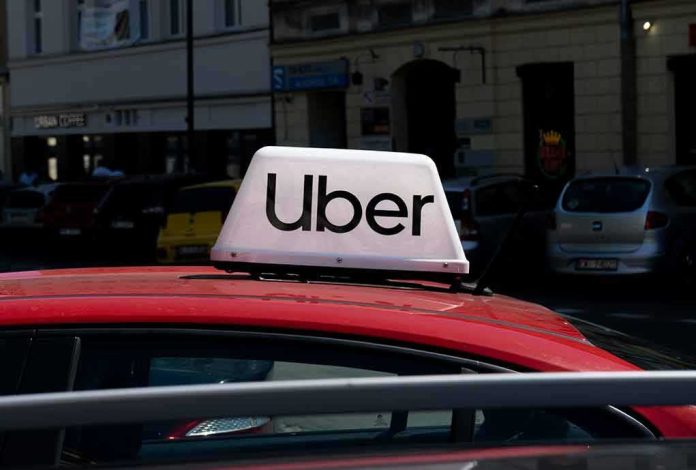
A Phoenix jury just pierced Uber’s independent contractor shield, holding the tech giant liable for $8.5 million in a driver’s brutal sexual assault—opening the floodgates for thousands more lawsuits that threaten everyday American freedoms and the gig economy President Trump champions.
Story Snapshot
- Federal jury in Phoenix awards $8.5M to victim Jaylynn Dean, first time Uber held liable for driver sexual assault under “apparent agency” doctrine.
- Incident in November 2023: 19-year-old raped by Uber driver after late-night bar ride in Tempe, Arizona; driver passed all background checks.
- Uber plans appeal, claims verdict affirms their safety investments; jury rejected negligence and punitive damages claims.
- Precedent strengthens 3,000+ pending cases, with Bloomberg estimating $500M+ settlement exposure for Uber.
The Incident and Verdict Details
In November 2023, 19-year-old Jaylynn Dean took an Uber from a Tempe bar to her hotel late at night. Her driver allegedly raped her during the ride. Dean reported the assault to police and Uber immediately upon arrival. She filed suit in December 2023. On February 5, 2026, a nine-member federal jury in Phoenix found Uber liable, awarding $8.5 million in damages. The jury applied the apparent agency doctrine, ruling the driver acted as Uber’s agent despite contractor status. This rejected Uber’s core defense in thousands of cases.
Uber’s Long Legal Battle Over Assault Claims
Uber has battled sexual assault lawsuits for a decade, always citing drivers as independent contractors to avoid liability. A 2016 San Francisco jury found Uber negligent but not responsible. From 2017-2018, Uber reported 5,981 U.S. assault incidents. By 2021-2022, reports dropped to 2,717 amid safety efforts like a shared ousted-driver database with Lyft. Yet internal documents allegedly showed Uber prioritized growth over safety. This Arizona verdict reverses prior outcomes, exposing the contractor model to new risks under apparent agency theory.
Stakeholders React to the Ruling
Plaintiff attorneys Sarah London and Alex Walsh hailed the verdict as validation for thousands of survivors, criticizing Uber’s profit-over-safety focus. Uber responded by announcing an appeal, noting the jury rejected negligence, defective product claims, and $120 million in punitive damages sought. The company stressed the driver’s clean record: 12 passed background checks over seven years, five-star ratings on over half of 10,000 rides. Bloomberg Intelligence warns early losses like this could force $500 million-plus settlements across 3,000 pending cases.
Conservatives watching this see a cautionary tale. Big Tech like Uber built empires on the gig economy’s flexibility—personal responsibility and limited liability that align with American values of free enterprise. Courts now risk upending that by treating platforms as insurers against every contractor’s crime. With President Trump in office, expect pushes for balanced reforms protecting innovation while bolstering real safety, not trial-lawyer windfalls that hike costs for working families relying on affordable rides.
Broader Impacts on Ridesharing and Economy
This precedent pressures Uber’s business model, potentially forcing driver reclassification as employees in some states. Passengers may gain better safety like enhanced checks or cameras, but at higher fares passed to consumers. Drivers face stricter scrutiny. Industry-wide, Lyft and others could follow with reforms. Economically, Uber’s stock faces hits amid weak Q1 2026 guidance. Politically, it fuels debates on gig worker rules—core to Trump’s pro-jobs agenda against overregulation. Survivors benefit from stronger cases, but unchecked litigation threatens the independent contractor freedom millions depend on.
Sources:
Uber jury awards $8.5 million in damages in sexual assault case
Uber found liable in sexual assault case and ordered to pay $8.5 million