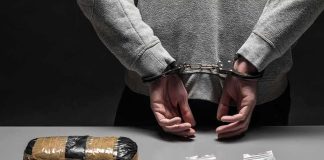
Prosecutors say a Southern California hospice ring siphoned roughly $267 million from Medi-Cal—another example of a system so porous that fraudsters can loot public health funds while families struggle to access basic care [5].
Story Snapshot
- California’s attorney general announced charges against 21 people tied to a hospice fraud ring that allegedly billed Medi-Cal for services never provided [5].
- Five arrests followed coordinated searches at 10 Southern California locations, with officials describing the sweep as part of a broader crackdown [1].
- Federal prosecutors separately noted eight arrests in related health care fraud actions and warned that healthcare fraud costs taxpayers hundreds of billions each year [3].
- Public records outline the allegations in detail; defense responses are not yet documented at the same level of specificity in the sources provided [4].
What Investigators Allege About The Scheme
California Attorney General Rob Bonta said a Los Angeles–area hospice fraud ring filed approximately $267 million in false Medi-Cal claims, with 21 defendants charged after a coordinated takedown called Operation Skip Trace [5]. Investigators alleged fake patient records, sham offices, and billing for services not rendered. The attorney general’s office reported five arrests and searches at 10 Southern California locations tied to the alleged network [1]. Prosecutors and agents framed the case as a large-scale abuse of a safety-net program intended to support end-of-life care [5].
Federal prosecutors in the Central District of California described a parallel enforcement push, announcing eight arrests connected to health care fraud schemes involving hospice operators and billing practices that targeted taxpayers [3]. The Department of Justice said the United States loses “hundreds of billions of dollars” annually to health care fraud, underscoring why multi-agency stings keep recurring in high-risk sectors like hospice and durable medical equipment [3]. These figures highlight systemic vulnerabilities that allow criminal rings to exploit reimbursement systems at scale.
Why The Numbers Look So Big In Fraud Takedowns
Enforcement agencies often publicize total amounts billed or paid to show the size of the alleged loss, which can produce headline-grabbing figures before trials or pleas resolve the details [3]. In this case, state officials pegged alleged fraudulent Medi-Cal billing at about $267 million, an amount spanning multiple defendants and locations [5]. Local coverage identified professionals—including a psychologist and a registered nurse—among those accused of running hospice entities that generated the claims central to the case [4]. These rollups reflect ring structures rather than one mastermind.
The defense side remains less visible at this stage. The materials provided contain no detailed counter-filings, affidavits, or declarations contesting specific evidence about falsified records or ghost offices [4]. Reporting emphasizes the scope of the charges and the mechanics of the alleged fraud while offering limited space for individualized rebuttals. That asymmetry is common early in complex fraud cases, where indictments and press releases arrive before motions practice or plea agreements surface that clarify responsibility and evidence strength [4].
What This Means For Taxpayers And Patients
Taxpayers ultimately absorb fraud losses through higher program costs, reduced services, or tighter eligibility screens that can hinder access for legitimate patients. Federal and state agencies say hospice fraud diverts funds from families facing end-of-life decisions and erodes trust in public programs [3][5]. California’s Department of Justice explains that Medi-Cal fraud includes billing for unnecessary or nonexistent care, upcoding, and identity misuse—behaviors alleged in this takedown that can ripple across clinics, insurers, and pharmacies when rings operate at scale [12][5].
Orange County man with 6 prior fraud convictions pleads guilty to diverting $270M+ in Medi-Cal funds—one of California's largest Medicaid frauds ever. Feds seized 7 properties, luxury cars, and a $1.5M… #MediCalFraud #California #Medicaid #FraudBusthttps://t.co/iEFJxXXE42
— @GlobalRightWatch (@AutonomusRepost) June 2, 2026
Across the political spectrum, fatigue with waste and abuse converges with anger over rising costs and bureaucratic inertia. Conservatives point to lax oversight and permissive licensing as drivers of fraud, while liberals warn that privatized incentives and weak guardrails enable profiteering. Both sides see a government too entangled with special interests to police the system consistently. The scale of the alleged Medi-Cal hospice scheme—and the recurring need for stings—reinforces the shared worry that accountability arrives late, after the money is gone [3][5][4].
Sources:
[1] Web – Fraudifornia Strikes Again: Feds Bust Man Behind One of the Biggest …
[3] YouTube – Alleged hospice fraud ring stole $267 million from taxpayers, AG says
[4] Web – 8 Arrested in Health Care Fraud Takedown, Including Owners of …
[5] Web – Doctors, nurses arrested in Southern California health care fraud …
[12] Web – 8 Arrested in Health Care Fraud Takedown, Including Owners of …