With the Supreme Court now backing state bans on transgender girls in school sports, the real pressure is shifting to the states that still allow them.
Story Snapshot
- The Supreme Court has ruled that states may legally bar transgender girls and women from female school sports teams.
- About half of states already restrict transgender youth from playing on teams that match their gender identity, but others still allow it.
- States that keep inclusive rules face rising political, legal, and media pressure to “get in line” with the new court backing.
- The ruling deepens public distrust, as many Americans see culture-war battles over sports as one more sign that elites ignore everyday problems.
Supreme Court Green Light For State Bans
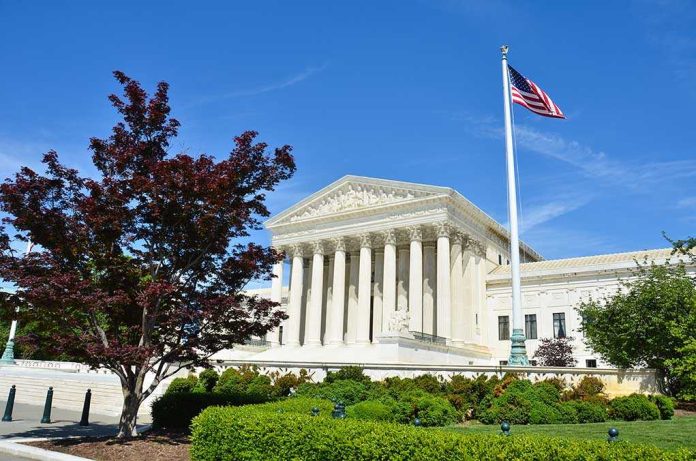
The United States Supreme Court’s June 30, 2026 ruling in the Idaho and West Virginia cases gave states a clear green light to ban transgender girls and women from female sports teams in public schools and colleges. Justice Brett Kavanaugh’s majority opinion said separate teams for biological males and biological females are “reasonable” because of physical differences between the sexes. The Court said these bans do not violate Title IX or the Equal Protection Clause, as long as states claim safety and competitive fairness.
This decision did not order a nationwide ban, but it affirmed that states are allowed to pass and keep such laws. That matters because 27 states already have statutes or policies blocking transgender students from playing on teams that match their gender identity, and two more use statewide regulations. Legal observers note the ruling will likely solidify those restrictions and make it harder to challenge them in federal court, while also signaling to other Republican-led states that similar laws will be upheld.
Where States Still Allow Trans Athletes
While bans now cover about half of transgender youth, 21 states plus Washington, D.C., and several territories still allow transgender students to play in line with their gender identity. Many of these states are governed by Democrats or have split government, and they adopted inclusive policies through school athletic associations or civil rights laws rather than new bans. These places now sit in a shrinking minority. They face mounting lawsuits, political attacks, and media scrutiny from activists and lawmakers who argue they are risking fairness in female sports.
Governors and legislatures in inclusive states are already under pressure to respond. Republican officials in states with bans are calling for a national standard that would force every state to bar transgender girls and women from women’s sports. At the same time, civil rights groups point to research suggesting no clear, across-the-board athletic advantage for transgender female athletes and warn that blanket bans are “unnecessary and harmful” for already vulnerable youth. That clash puts inclusive states on a legal and moral hot seat: do they stand by their policies or change course?
Media, Advocacy, And Growing Polarization
Mainstream outlets like NBC, NPR, the BBC, and ESPN framed the Supreme Court ruling as a major setback for lesbian, gay, bisexual, transgender, and queer rights and a leap deeper into the culture wars. Supporters of the bans, including top Republican leaders, celebrated the decision as “common sense” and a win for girls’ sports. Opponents, including the American Civil Liberties Union, called it “devastating for transgender youth” and pledged more legal fights and public campaigns. This gap in language feeds the sense, on both left and right, that elites are fighting symbolic wars while real problems go unsolved.
Three liberal justices dissented, arguing the Court went further than needed and did not fully examine how hormone therapy affects physical advantages. That split signals that legal battles are not over, especially in states that protect transgender athletes. Those states now face lawsuits backed by national advocacy networks that want uniform sex-at-birth rules. At the same time, families of transgender youth feel their kids are being turned into political props. For many Americans already skeptical of Washington, this looks like one more example of distant power players using ordinary people’s lives to score points.
Fairness, Evidence, And The Deep State Fear
Supporters of bans say the issue is simple: girls’ sports exist to protect opportunities for biological females, and mixing categories could erase decades of progress under Title IX. They argue that strength, speed, and injury risk are tied to male puberty, and that states do not need detailed studies to act in the name of fairness. Critics answer that most sports policies around transgender people are not based on strong medical evidence and that current data does not prove a blanket athletic edge for transgender women. Both sides accuse each other of ignoring science.
Today, the Supreme Court upheld West Virginia and Idaho state laws that bar transgender athletes from playing on girls’ and women’s sports teams, a decision with nationwide implications.
27 states have enacted restrictions on trans athletes competing within their borders. States…
— (((Orchid)))🌻 (@OrchidNYC) June 30, 2026
For many older conservatives and liberals, this fight fits a pattern. They see a federal government and court system that moves fast on hot-button cultural issues while dragging its feet on inflation, wages, health care, and the basic costs of living. Some believe “deep state” elites use topics like transgender sports to distract voters and keep them angry and divided. Whether one agrees or not, states that still allow transgender athletes in girls’ sports now carry a target on their backs. They must prepare for court cases, political attacks, and national headlines, all while local families just want fair play and a chance at the American Dream.
Sources:
npr.org, nbcnews.com, bbc.com, youtube.com, bestcolleges.com, nytimes.com