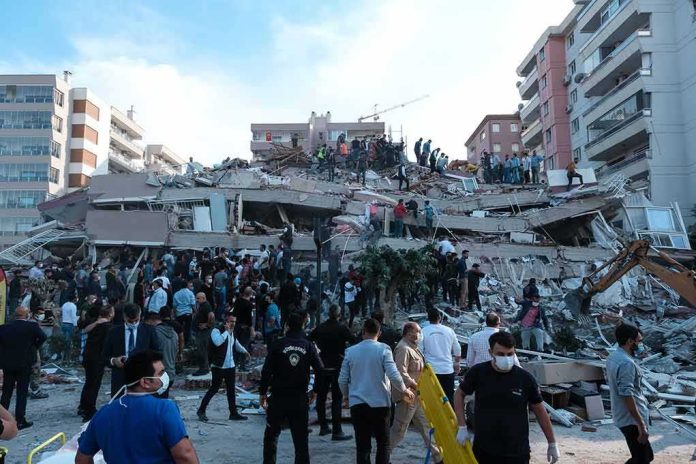
A powerful earthquake in western Colombia collapsed at least 20 buildings in the city of Cali, trapping people inside the rubble, according to Cali Mayor Alejandro Eder.
Quick Take
- Cali Mayor Alejandro Eder says at least 20 buildings collapsed in the city, with people trapped inside.
- The earthquake struck near San Jose del Palmar and also hit the city of Quibdo, causing injuries and severe damage.
- Colombia’s Civil Aviation Authority reports damage at six airports across the country.
- Rescue teams are working through the collapsed structures as officials still assess the full scope of the disaster.
Mayor Describes Trapped Residents and Active Rescue Effort
Mayor Eder told residents of Cali that emergency crews were already on scene. “We currently have at least 20 collapsed structures in the city with people trapped inside,” he said, adding that his office was managing the emergency alongside the city’s rescue agencies. His statement, given shortly after the quake, offers the clearest early count of damage in Colombia’s third-largest city.
A separate report from the area said fears of trapped people extended to several buildings, not just one confirmed site, meaning rescue crews may still be locating victims. That account matches the mayor’s own words and points to a rescue operation that was still unfolding in the hours after the ground stopped shaking.
Earthquake Damage Spreads Beyond Cali
The quake’s reach went far past one city. Officials in Quibdo, closer to the epicenter near San Jose del Palmar, reported injuries and severe building damage. A local official said teams were still doing a damage assessment before releasing an official report, a sign that Colombia’s government had not yet settled on final numbers for injuries or destroyed buildings.
Colombia’s Civil Aviation Authority confirmed damage at six airports, including in Pereira, Manizales, Quibdo, Armenia, Cartago and Buenaventura. Airport damage across such a wide stretch of the country shows the quake’s force reached well beyond Cali, disrupting transportation infrastructure that rescue and relief efforts may depend on in the days ahead.
Early Damage Counts Often Shift After Major Quakes
Initial building-collapse counts after major earthquakes commonly change as engineers and rescue teams get a fuller picture. After the 1989 Loma Prieta earthquake in California, early estimates in Santa Cruz put collapsed buildings at 20, while other reviews later counted closer to 40 in that same area. That kind of shift is common, not a sign anything reported from Cali is wrong.
Colombia has faced deadly quakes before. A 1995 earthquake in western Colombia killed at least 28 people, with the city of Pereira hit hardest by collapsed buildings and walls. That history shows why officials in Cali are moving fast, since past quakes in the same region have caused fatal building failures before full assessments were even finished.
Engineers who study earthquake damage note that raw collapse counts can also mix different types of harm together. Some buildings tagged as “collapsed” in early reports actually suffered partial failures or severe structural cracking rather than a total fall, a distinction that usually gets sorted out only after inspectors reach every site. For now, the mayor’s number stands as the best available count, and rescue crews remain focused on reaching anyone still trapped rather than finalizing damage tallies.
Sources:
engr.psu.edu, amp.dw.com, conservation.ca.gov, abc7news.com, scvhistory.com