
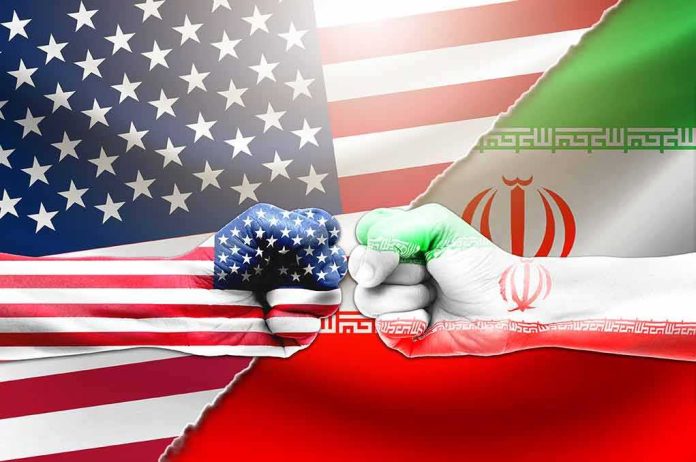
Iran’s leaders are being boxed out of the global finance system while a U.S. naval “wall of steel” squeezes their oil cash, and Washington says that leverage is the point.
Story Snapshot
- Treasury Secretary Scott Bessent says sanctions aim to isolate Iran’s top elites from global money.
- Bessent links financial pressure to a naval blockade that he says chokes Iran’s oil revenue.
- He claims wary buyers are avoiding Iranian oil, leaving China as a key outlet.
- U.S. red lines include reopening the Strait of Hormuz and surrendering highly enriched uranium.
Washington’s Strategy: Squeeze the Regime’s Cash Flows
Treasury Secretary Scott Bessent says the United States will keep using every tool to isolate Iran’s Supreme Leader Ali Khamenei and regime elites from global finance, framing money as the regime’s lifeblood. He argues that sanctions and targeted financial actions can “suffocate” Tehran’s ability to pay soldiers and fund operations. This approach puts the Department of the Treasury at the center of a high-stakes standoff, with the goal of forcing talks without jumping straight to a wider war.
Bessent ties economic moves to enforcement at sea. He says the United States Navy has formed a “wall of steel” around Iran to block oil exports and cut revenue, pairing financial isolation with maritime pressure. He also says sanctions fears are scaring off oil buyers. According to Bessent, uncertainty over future penalties has pushed most customers to the sidelines, with China a notable exception. That mix of deterrence and doubt, he argues, is central to U.S. leverage in talks.
Leverage and Red Lines in Any Potential Deal
Bessent outlines strict terms for progress. He says no deal moves forward until the Strait of Hormuz reopens and Iran turns over highly enriched uranium, placing core nuclear and shipping issues at the top of the agenda. He describes the broader posture as “escalate to de-escalate,” meaning the United States raises pressure to bring Iran to the table rather than to spark open conflict. President Trump has also stressed an emphasis on sanctions over large-scale strikes during this phase.
U.S. officials say pressure is changing conditions inside Iran. Bessent contends that Iran’s attack capabilities have been cut down and that financial constraints limit Tehran’s options. He adds that the administration is tracking Iran’s inflation and budget strains as signs that sanctions are working. These claims support the message that financial tools can shape security outcomes, even as the Pentagon maintains forces to police shipping lanes and deter escalation at sea.
What We Know, What We Don’t, and Why It Matters
The public record shows firm U.S. assertions, but not all outcomes are independently verified in detail. Bessent’s claims about blocked payments, falling oil sales, or payroll stress rely on official statements and media interviews rather than released data sets in these reports. Analysts have long debated how much sanctions alone drive Iranian decisions. Some studies find sanctions bite hard but often fall short of forcing lasting policy changes.
Trump Says US ‘Only Semi-Negotiating’ With Iran
The economic sanctions and our naval blockade of the Straits of Hormuz are bringing immense pressure to bear on the illegitimate terrorist Islamic Regime in Iran.https://t.co/Ww4cawKmQz
— GiveMeLiberty (@ru23052) August 10, 2026
For Americans across the political spectrum, the stakes feel familiar. Many see powerful elites gaming the system while working families carry the costs. Supporters of tough sanctions view them as a way to avoid war and cut funds to hostile actors. Critics worry about human and economic side effects and about mission creep from sanctions to blockade. What is clear is that Washington is using dollars and deterrence together—and says Iran will face both until the key conditions are met.
Sources:
bbc.com, nbcnews.com, foxnews.com, iranintl.com, youtube.com, forbes.com, finance.yahoo.com